Fly Line

Sufix Performance Lead Core 100 Yards Metered Fishing Line (15-Pounds)

Sufix Performance Lead Core 100 Yards Metered Fishing Line (15-Pounds)

# **How to Choose Sufix Performance Lead Core 100 Yards Metered Fishing Line**

Fishing enthusiasts know that the right fishing line can make all the difference between a successful catch and a frustrating day on the water. Among the many options available, the **Sufix Performance Lead Core 100 Yards Metered Fishing Line** stands out as a top choice for anglers targeting deep-water species. In this guide, we’ll explore why this line is a game-changer and how to choose the best one for your fishing needs.

## **Understanding Lead Core Fishing Line**

Lead core fishing line is designed for **trolling in deep water**, where traditional monofilament or braided lines may not reach the desired depths effectively. The **Sufix Performance Lead Core** features a **lead wire core** wrapped in a durable nylon sheath, providing both weight and strength. The **metered color-coding system** (typically changing every 10 yards) allows anglers to track how much line is out, helping them maintain precise depth control.

## **Key Features of Sufix Performance Lead Core**

### **1. Superior Sinking Ability**
The **lead core construction** ensures the line sinks quickly, making it ideal for targeting species like **lake trout, salmon, walleye, and striped bass** in deep waters. Unlike standard lines, this one eliminates the need for additional weights or downriggers in many situations.

### **2. Metered Color Coding**
One of the biggest advantages of this line is its **10-yard color segments**. Each color change helps anglers **measure the exact amount of line deployed**, allowing for precise depth adjustments. This is especially useful when trolling at different speeds or when fish are suspended at specific depths.

### **3. High Abrasion Resistance**
The **nylon sheath** protects the lead core from fraying and provides excellent abrasion resistance against rocks, structure, and fish teeth. This durability ensures the line lasts longer, even in tough fishing conditions.

### **4. Smooth Casting & Low Memory**
Unlike some lead core lines that coil excessively, **Sufix Performance Lead Core** has **low memory**, reducing tangles and improving casting performance. This makes it easier to handle, whether you’re trolling or casting.

### **5. Strength & Sensitivity**
With a **breaking strength of 18 lbs**, this line is strong enough to handle large fish while still maintaining sensitivity to detect subtle strikes. The lead core also enhances lure action, making presentations more natural.

## **How to Choose the Right Sufix Performance Lead Core Line**

### **1. Determine Your Target Depth**
Since the line sinks at a **consistent rate (about 5-7 feet per color change at trolling speeds)**, calculate how much line you need to reach your desired depth. For example, if you’re fishing in **30 feet of water**, you’ll need to let out **4-6 colors (40-60 yards)**.

### **2. Consider the Fish Species**
– **Lake trout & salmon**: Typically found in deep, cold waters—this line excels in reaching them.
– **Walleye & striped bass**: Often suspend at mid-depths; the metered system helps fine-tune your presentation.
– **Muskie & pike**: While not always deep-dwelling, the abrasion resistance helps against their sharp teeth.

### **3. Match Your Reel & Rod Setup**
– **Reel Capacity**: Ensure your reel can hold **100 yards of lead core plus backing** (since lead core is heavy, a **large-capacity reel** is recommended).
– **Rod Action**: A **medium-heavy to heavy rod** with a **soft tip** helps absorb the shock of hard strikes while maintaining control.

### **4. Pair with the Right Leader**
Since lead core is visible underwater, attaching a **fluorocarbon or monofilament leader (10-20 ft)** improves stealth. Use a **blood knot or barrel swivel** to connect the leader securely.

## **Final Thoughts**

The **Sufix Performance Lead Core 100 Yards Metered Fishing Line** is a **must-have for deep-water anglers** who demand precision, durability, and performance. By understanding its features and how to select the right setup, you can maximize your success on the water.

Whether you’re trolling for **lake trout in the Great Lakes or targeting suspended walleye**, this line provides the **depth control and strength** needed to land more fish. Upgrade your gear today and experience the difference a high-quality lead core line can make!

For more expert fishing tips and gear reviews, stay tuned to **KyleBooker Fishing Blog**—your trusted source for all things angling! 🎣

Transparent Fishing Line 700ft(Approx. 230.1m),Invisible Fishing Line Nylon Cord for Hanging Balloons Crafts Pictures Decoration,Transparent Cord for Bracelets Necklaces,Jewelry Making Beading Cord,WU

Transparent Fishing Line 700ft(Approx. 230.1m),Invisible Fishing Line Nylon Cord for Hanging Balloons Crafts Pictures Decoration,Transparent Cord for Bracelets Necklaces,Jewelry Making Beading Cord,WU

# **How to Choose the Best Transparent Fishing Line: A Comprehensive Guide**

When it comes to fishing, the right gear can make all the difference between a successful catch and a frustrating day on the water. One of the most crucial yet often overlooked components is the fishing line. If you’re looking for a high-quality **transparent fishing line** that offers strength, invisibility, and versatility, the **KyleBooker Transparent Fishing Line (700ft / 230.1m)** is an excellent choice.

In this guide, we’ll explore how to choose the best **invisible fishing line**, its key features, and its various applications—from angling to crafts like **balloon decorations, jewelry making, and beading**.

## **Why Choose a Transparent Fishing Line?**

A **clear fishing line** is designed to be nearly invisible underwater, reducing the chances of fish detecting it. This is especially important in clear water conditions where fish are more cautious. The **KyleBooker nylon cord** is made from high-quality, durable material that ensures strength while maintaining transparency.

### **Key Features to Consider**

1. **Material & Strength**
– The **KyleBooker fishing line** is made from premium **nylon monofilament**, offering excellent tensile strength while remaining lightweight.
– It resists abrasion, making it ideal for both freshwater and saltwater fishing.

2. **Diameter & Weight Capacity**
– A thinner line is less visible but may have lower strength. This **700ft spool** provides a balance between stealth and durability.
– Check the **pound-test rating** to ensure it matches your target fish species.

3. **Knot Strength & Flexibility**
– A good fishing line should hold knots securely without slipping.
– The **KyleBooker nylon cord** is flexible enough for smooth casting yet strong enough to handle sudden pulls.

4. **UV & Water Resistance**
– Prolonged exposure to sunlight can weaken some lines. This **transparent cord** is UV-resistant, ensuring long-lasting performance.

## **Beyond Fishing: Versatile Uses of Transparent Nylon Cord**

While primarily designed for fishing, this **invisible nylon cord** has multiple creative applications:

### **1. Balloon & Picture Decorations**
– Perfect for **hanging balloons, photo backdrops, and party decorations** without visible strings.
– Its **transparency** ensures a clean, professional look for events.

### **2. Jewelry Making & Beading**
– Used in **bracelets, necklaces, and beadwork** due to its flexibility and durability.
– Unlike traditional threads, it doesn’t fray easily, making it ideal for **DIY crafts**.

### **3. General Crafting & Hanging Displays**
– Great for **hanging lightweight decorations, fairy lights, or small ornaments**.
– Its **invisibility** ensures a seamless aesthetic in home décor.

## **Why Choose KyleBooker’s Transparent Fishing Line?**

– **700ft (230.1m) Length** – Ample supply for multiple projects or long fishing trips.
– **High-Quality Nylon** – Strong, abrasion-resistant, and long-lasting.
– **Multi-Purpose Use** – Suitable for fishing, crafts, jewelry, and decorations.
– **Invisible in Water** – Increases fishing success by reducing line visibility.

## **Final Tips for Selecting the Right Fishing Line**

– **Match the line to your fishing environment** (clear water vs. murky water).
– **Consider the fish species**—lighter lines for small fish, heavier for larger catches.
– **Test knot strength** before heading out to avoid break-offs.

Whether you’re an angler looking for an **invisible fishing line** or a crafter needing a **strong, transparent cord**, the **KyleBooker Transparent Fishing Line** is a reliable and versatile choice.

**Upgrade your fishing and crafting game today with this high-performance nylon cord!**


Would you like any modifications or additional details on specific fishing techniques? Let me know how I can further tailor this to your audience! 🎣✨

DaiwaFishing Line

DaiwaFishing Line

# **How to Choose Daiwa Fishing Line: A Comprehensive Guide**

As an angler, selecting the right fishing line is crucial for success on the water. Daiwa, a leading brand in the fishing industry, offers a wide range of high-quality fishing lines designed for different techniques and conditions. Whether you’re targeting bass, trout, or saltwater species, choosing the right Daiwa fishing line can significantly impact your performance. In this guide, we’ll break down the key factors to consider when selecting a Daiwa fishing line, helping you make an informed decision.

## **1. Understand the Different Types of Daiwa Fishing Lines**

Daiwa produces several types of fishing lines, each with unique properties:

### **Monofilament (Mono) Lines**
– **Pros:** Affordable, good knot strength, forgiving stretch for shock absorption.
– **Cons:** More memory (coiling), absorbs water over time, weaker than braid or fluorocarbon.
– **Best for:** Beginners, topwater lures, and situations where stretch is beneficial.

### **Fluorocarbon Lines**
– **Pros:** Nearly invisible underwater, abrasion-resistant, sinks faster than mono.
– **Cons:** Stiffer than mono, more expensive, requires careful knot tying.
– **Best for:** Clear water, finesse fishing, and leader material.

### **Braided Lines**
– **Pros:** Extremely strong, no stretch for better sensitivity, thin diameter for increased line capacity.
– **Cons:** Highly visible in clear water, requires a leader in some situations.
– **Best for:** Heavy cover, deep-water fishing, and techniques requiring sensitivity.

## **2. Consider Line Strength (Pound Test)**

The pound test (lb) indicates how much weight the line can handle before breaking. Daiwa offers lines ranging from ultra-light (2-6 lb) to heavy-duty (50+ lb).

– **Light (2-10 lb):** Ideal for panfish, trout, and finesse bass fishing.
– **Medium (10-20 lb):** Versatile for bass, walleye, and inshore saltwater fishing.
– **Heavy (20-50+ lb):** Best for big game fish, heavy cover, and offshore fishing.

## **3. Match the Line to Your Fishing Technique**

Different fishing techniques require specific line characteristics:

– **Spinning Reels:** Lighter lines (4-12 lb) work best to prevent tangling.
– **Baitcasting Reels:** Heavier lines (12-30 lb) handle better with less backlash.
– **Drop Shotting & Finesse Fishing:** Fluorocarbon (6-10 lb) for sensitivity and invisibility.
– **Jigging & Flipping:** Braid (30-65 lb) for power and abrasion resistance.

## **4. Check for Special Features**

Daiwa incorporates advanced technologies into their lines:

– **J-Fluoro:** Premium fluorocarbon with low memory and high abrasion resistance.
– **J-Braid:** High-density braid with smooth casting and minimal water absorption.
– **Samurai Braid:** Ultra-thin yet strong, perfect for long casts and deep drops.

## **5. Environmental & Water Conditions**

– **Clear Water:** Fluorocarbon for stealth.
– **Murky Water:** Braid for better visibility and sensitivity.
– **Saltwater:** Corrosion-resistant lines like Daiwa’s Saltiga series.

## **Final Thoughts**

Choosing the right Daiwa fishing line depends on your target species, fishing style, and water conditions. By understanding the differences between mono, fluoro, and braid—and matching them to your needs—you’ll maximize your fishing efficiency.

For premium fishing gear, check out **KyleBooker**’s selection of Daiwa lines and other top-tier tackle. Tight lines!


*This article is brought to you by **KyleBooker**, your trusted source for high-performance fishing gear.*

Would you like any modifications or additional details on specific Daiwa lines? Let me know how I can refine this further!

Fly Line: Your Guide to Buying Level Line Tapers for Effective Fishing

When it comes to fly fishing, choosing the right line is crucial for an effective experience. We can enhance our precision and casting performance significantly by understanding the role of level line tapers. These specialized lines improve the way our flies behave on the water, contributing to better presentations and improved catch rates.

A serene riverbank with a fly line and tapered fishing line laid out, surrounded by lush greenery and the gentle sound of flowing water

For those wondering where to buy level line taper fishing options, numerous retailers and online platforms cater specifically to our needs. By exploring these sources, we can find competitive prices and a variety of products to suit our fishing style. Each taper type offers distinct advantages, making it essential to select one that complements our technique.

Level line taper fishing is an art that combines knowledge with practice. Using a tapered line can provide us with the benefits of smoother casting and better control, especially in challenging conditions. By investing in a quality tapered fishing line, we not only improve our skill set but also enhance our overall enjoyment of the sport.

Understanding Fly Line Tapers

Fly line tapers significantly impact casting performance and drag resistance, which makes them crucial for our fishing experience. A well-designed level line taper can enhance efficiency and accuracy in various fishing conditions.

Level Line Taper Design Principles

When we discuss level line tapers, we are referring to lines that maintain a consistent diameter from tip to end. This design offers specific advantages in casting and line control.

One of the main benefits of level tapers is their simplicity. They are often used in applications like tenkara fishing, where an uncomplicated setup is preferred. In contrast, tapered lines offer variances in diameter that provide advantages in specialized scenarios.

By adjusting the diameter at various points along the line, tapered designs can improve casting distance and reduce wind resistance. This makes them suitable for heavier flies and longer casts. In various situations, we find that incorporating both level and tapered lines into our arsenal can cater to different fishing needs.

Materials and Technologies in Fly Line Construction

The construction of fly lines has evolved, utilizing materials like nylon and fluorocarbon. These materials contribute to durability and performance in diverse fishing environments.

Modern fly lines often incorporate a multi-layer construction. The outer layer typically focuses on high visibility to improve tracking, while the inner core can affect sensitivity and stiffness.

We see advancements in technology that enhance casting performance. Features such as enhanced slickness and reduced friction improve line retrieval and casting accuracy. Knowing the right materials helps us choose lines tailored to our specific fishing conditions.

Understanding these principles allows us to select the most appropriate lines for our fishing style.

Fly Line Selection for Specific Fishing Scenarios

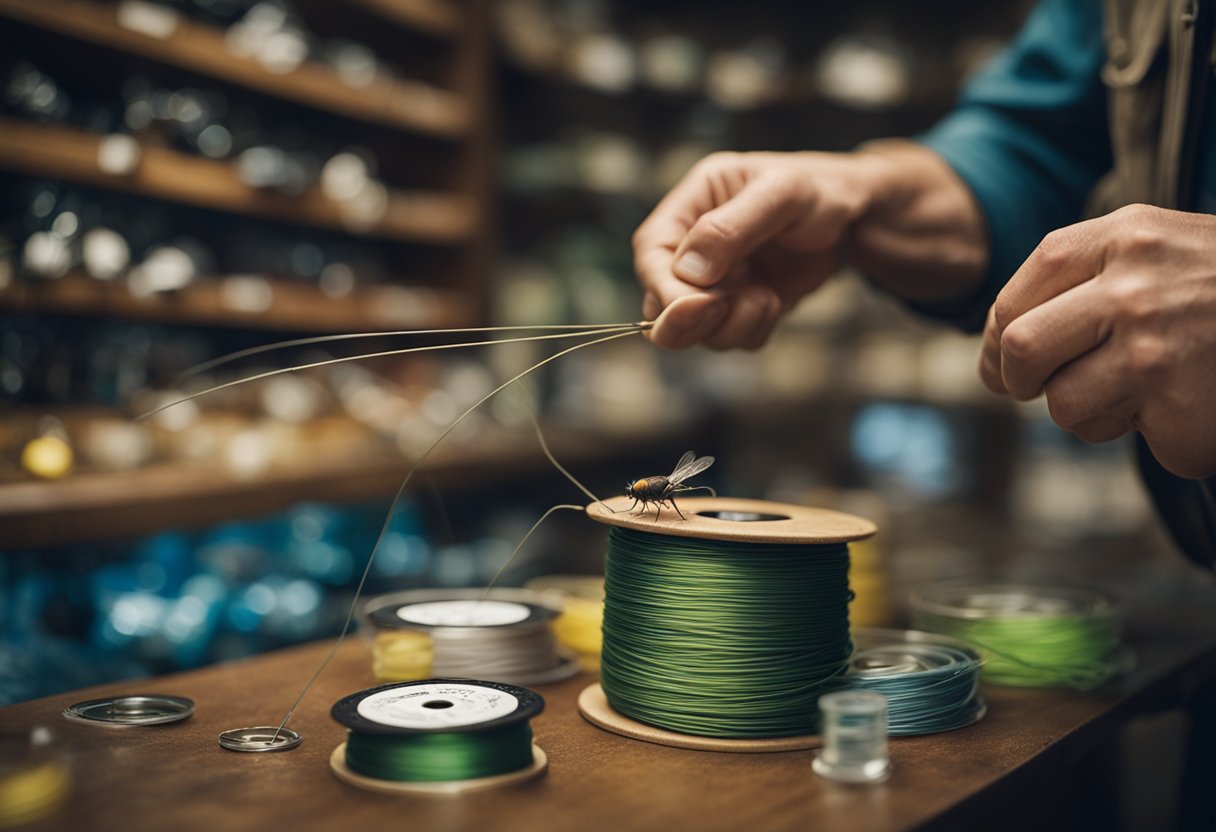
A serene river flows through a lush green forest, with a fly fisherman carefully selecting a tapered fishing line from a variety of options spread out on a wooden table

Understanding the right fly line taper and type can significantly improve our fishing experience. By choosing the appropriate line for different scenarios, we can enhance casting performance and overall effectiveness.

Choosing the Right Taper for Trout and Bass

When targeting trout and bass, selecting the right taper is critical. For trout, we recommend using a tapered fly line that allows for delicate presentations. A moderate taper enables soft landings, which is essential for spooking trout. In contrast, for bass fishing, we benefit from a short-bellied taper. This design offers increased power for casting larger flies over greater distances, making it suitable for aggressive strikes.

  • Trout Taper Recommendations:
    • Floating Lines: Best for surface presentations.
    • Fluorocarbon Tippet: Enhances stealth and invisibility.
  • Bass Taper Recommendations:
    • Level Lines: Ideal for consistent casting.
    • Stiffer Rods: Support heavier flies and quick retrieves.

Maximizing Tenkara Fishing with Specialized Lines

For tenkara fishing, the choice of line is vital to our success. We often prefer soft tenkara lines for their ease of casting and ability to control delicate presentations. These lines typically range from 3 to 6 meters and help control the depth of our flies.

To achieve optimal performance, it’s essential to match line length with rod length. For example, a 3.6-meter rod pairs well with a 3.0-meter line. We can also use level lines for a straightforward casting technique, emphasizing precision over distance.

Key elements for effective tenkara setups:

  • Line Weight: Balanced with the rod’s action.
  • Casting Technique: Focus on smooth, fluid motions.

The Role of Line Weight and Density in Fishing Success

Line weight and density play vital roles in our fishing success. Choosing the right line weight compensates for rod action and ensures optimal casting. For example, a 5-weight line works well with a medium-action rod, providing versatility for different presentations.

Density affects how the line behaves in water. Floating lines are intended for surface flies, while sinking lines are ideal for reaching deeper waters. Understanding this can greatly enhance our chances of landing fish by allowing us to present flies at the desired depth.

To consider:

  • Floating Fly Line: Best for dry flies.
  • Sinking Fly Line: Ideal for nymphing techniques.
  • Extended Head Lines: Facilitate longer casts.

By tailoring our fly line choice to specific conditions, we can significantly improve our fishing outcomes.

Purchasing Advice and Customer Support

When considering the best options for level line tapers, we focus on quality sources and the support available for both novice and experienced anglers. Understanding where to buy and how to get assistance is essential for making informed decisions.

Where to Find High-Quality Level Line Tapers

We recommend purchasing level line tapers from reputable retailers or specialized fishing shops. Popular brands like Rio Avid Trout WF Fly Line and Rio Gold Fly Line offer reliable performance.

Consider checking out online retailers such as:

  • Amazon: Wide selection and customer reviews.
  • Local Bait Shops: Support local businesses and get personalized advice.
  • Fishing Pro Shops: Staff can provide in-depth product knowledge.

Additionally, look for taper options made from fluorocarbon or nylon mono for specific fishing needs. Understanding product specifications, such as the ease of loading, enhances our experience on the water.

Assistance for Beginners to Advanced Anglers

Customer support is crucial when navigating tools like tapered fishing lines. Most brands, including Fujino, provide detailed resources for all skill levels. We encourage utilizing FAQs, instructional videos, and customer service for any inquiries.

For beginners, access to tippet and leader options is vital for successful fishing. Customer service can assist with understanding how to pair lines with rods effectively.

Advanced anglers might seek help with specific taper adjustments or product compatibility. Engaging with customer support can lead to recommendations that enhance our fishing setup, ensuring we maximize our time on the water.

Fly Line: Tenkara Level Line Taper Setup and Advantages

As an angler, I’ve often found the right fly line can significantly enhance my fishing experience. The Tenkara level line taper setup is essential for maximizing casting efficiency and improving presentation. Understanding how to select the best knots for your level line taper is equally important to ensure reliability and performance on the water.

A fly line is being carefully attached to a Tenkara level line taper setup using the best knots for a secure connection. The advantages of the level line taper are evident in the precision and control it offers for fly fishing

Exploring the advantages of level line tape has transformed my approach to tenkara fishing. I appreciate how it allows for better line control and sensitivity, which makes a noticeable difference when targeting specific species. Among the options available, I’ve had great success with the Sunline level line taper, which offers a balance of durability and flexibility that meets my needs.

Tenkara Level Line Taper Setup

Setting up a Tenkara level line taper requires attention to detail and an understanding of how the line interacts with the rod. This ensures an effective fishing experience.

Understanding Tenkara Level Lines

Tenkara level lines are typically uniform in diameter and offer enhanced control and sensitivity. Unlike tapered lines, they deliver consistent performance across varying casts.

When selecting a level line, consider materials like nylon or fluorocarbon for their resistance to abrasion and visibility underwater. A common choice is 0.6 mm to 0.8 mm diameter lines, which suit various fishing conditions. Their straight design allows for precise presentations, effective in technical waters.

Setting Up Your Tenkara Rod

To set up your Tenkara rod with a level line taper, attach the line to the top of the rod using a loop-to-loop connection or an appropriate knot. I prefer using a double-uni knot for its reliability and strength.

Then, I adjust the line length according to my fishing environment. Typical lengths range from 12 to 15 feet. This allows for longer casts while maintaining control. Ensure your line is free of twists to prevent tangling.

Finally, attach the tippet to the end of your level line. Choose a tippet size that matches your target species. A common approach is to use 4X to 5X tippet for small to medium-sized fish.

Knots and Connections

A strong and reliable connection is vital in fly fishing with a level line taper. The right knots and attachment techniques ensure that your line performs optimally, supporting your casting and catch.

Best Knots for Level Line Tapers

When using level line tapers, I recommend a few specific knots that excel in strength and reliability. The Double Fisherman’s Knot is a favored choice, particularly for connecting two lines. It creates a strong hold and is less likely to slip.

Another excellent option is the Uni Knot. Its versatility allows me to attach my line to tippets or other terminal tackle effectively. It’s simple to tie and works well with various line types.

Always moisten the knot before tightening to reduce friction. After tying, I inspect the knot to ensure everything is secure and aligned. A well-tied knot minimizes the risk of losing a catch due to line failure.

Attaching the Line to the Rod

Attaching the level line to the rod requires careful technique for optimal performance. I typically use a simple Loop-to-Loop connection for this purpose. This method allows for easy removal and replacement of the line.

To create this connection, I form a loop in the line and attach it to the rod’s tip. I ensure the loop is snug, allowing the line to pass through guides smoothly.

For added security, I consider using tape or silicone bands to secure the connection if needed. This helps prevent any unwanted slippage during casting. Being diligent in this process ensures I maintain accuracy and control on the water.

Sunline and Line Types

Sunline offers various line types that cater to different fishing techniques and environments. Understanding these characteristics helps anglers select the best option for their needs.

Sunline Level Line Taper Characteristics

Sunline’s level line taper is designed for Tenkara fishing, providing a balance between castability and sensitivity. The materials used are typically high-quality monofilament, which contributes to the line’s strength and durability.

I appreciate that Sunline offers a range of diameters, accommodating varied conditions. The lines maintain their integrity over time, resisting abrasion. Additionally, the taper design allows for smooth transitions when casting.

The color options are also useful, helping with visibility in different water conditions. Their performance is reliable, ensuring consistent delivery and hook sets.

Comparing Different Line Materials

When evaluating line materials, I often consider monofilament, fluorocarbon, and braided lines.

  • Monofilament: Offers stretch, which can be beneficial for absorbing shocks during fights. It’s also affordable and easy to manage.
  • Fluorocarbon: Known for its low visibility underwater and high sensitivity. It sinks faster, making it advantageous for certain presentations.
  • Braided Line: Provides superior strength to diameter ratios. I find that it has minimal stretch, leading to instant feedback during fishing.

Each material has unique properties and can be suitable depending on fishing conditions. Testing different materials allows me to determine the best fit for my fishing style.

Benefits and Handling

A serene river with a fly line gracefully floating on the water, showcasing the benefits and handling of a tenkara level line taper setup

In this section, I will detail the advantages of level line tapers and provide insights into effective casting techniques. These elements are crucial for maximizing the performance of Tenkara fly fishing.

Advantages of Level Line Taper

The level line taper offers numerous benefits for precision and control. It provides a consistent diameter throughout its length, which enhances the line’s sensitivity and responsiveness. This allows me to detect even the slightest bites.

Another advantage is increased casting distance. Since the line maintains an equal thickness, air resistance is minimized, enabling longer, more accurate casts. For those targeting specific spots, this precision is invaluable.

Additionally, level lines reduce tangles and wind knots, as the uniform taper helps maintain a smooth flow during casting. The ease of handling is a significant factor, especially for beginners who may struggle with more complex line configurations.

Casting Techniques for Level Lines

When using a level line, I focus on subtle and smooth casting movements. A gentle flick of the wrist is crucial, as it prevents overloading the rod and allows for greater accuracy.

I often practice the “10 o’clock to 2 o’clock” motion. This technique involves raised arm movement, creating an efficient stroke that helps maximize line distance without overexerting.

Furthermore, I pay attention to my line control. Keeping the line taut ensures that I can maintain contact with the fly, which is essential for a good hook set. Proper line management helps in achieving a delicate presentation, attracting fish effectively.

Fly Line: Choosing Weight Forward Options for Trout and Beginners

When it comes to fly fishing, the choice of fly line is crucial for success. Using a weight forward fly line for trout offers improved casting distance and accuracy, making it easier to present your fly effectively. Whether you’re targeting freshwater streams or saltwater environments, understanding the nuances of different line applications can enhance your experience on the water.

A fly line, weight forward for trout, floats in the water, with saltwater line coiled nearby

For beginners, weight forward fly lines simplify the learning curve. By focusing the weight towards the front of the line, these lines allow for easier casting and better control. This is particularly beneficial when learning to cast effectively in various conditions, whether aiming for a brook trout or chasing saltwater species.

Setting up a weight forward fly line requires attention to taper and line weight. Selecting the right line for the specific species and environment is essential for performance. A well-matched line not only improves your casting but also increases your chances of landing that prized catch.

Understanding Fly Line Characteristics

Fly line characteristics significantly impact performance, casting precision, and the overall fishing experience. The key factors include taper designs, materials, and proper weight selection, all of which enhance the effectiveness of various fishing techniques.

Fly Line Taper Designs

Fly line taper refers to the gradual change in thickness along the line’s length. Common taper designs include weight forward, double taper, and level lines.

  • Weight Forward: This design features a thicker front section, allowing for easy loading of the rod, beneficial for casting larger flies or in wind conditions.
  • Double Taper: This line tapers at either end, providing a more delicate presentation, which is ideal for dry flies or nymphs.
  • Level Lines: These maintain a consistent diameter, often used for specialized techniques like those requiring specific sinking lines.

Choosing the right taper affects casting distance, accuracy, and the presentation of flies, ensuring I can adapt to various fishing scenarios.

Fly Line Materials and Construction

Fly lines are constructed from various materials, primarily PVC and polyurethane, each offering distinct advantages.

  • PVC Lines: These are generally more affordable but may lack durability over time.
  • Polyurethane Lines: Known for their longevity and flexibility, they perform better in various temperatures and conditions.

Quality construction ensures that the fly line maintains its shape and performance. Brands like Rio, Scientific Anglers, and Cortland use advanced technologies to enhance durability and performance, making their products suitable for both freshwater and saltwater environments.

Choosing the Correct Fly Line Weight

Selecting the appropriate fly line weight is crucial for aligning with the fly rod specifications. The line weight should match the rod for optimal performance, ensuring that I can cast effectively and with precision.

The common weights range from 1 to 14, catering to different fishing scenarios. For example, a 5-weight line is perfect for trout fishing, while a 10-weight line is ideal for casting larger streamers in saltwater.

It’s vital to consider the type of flies I’ll be using—dry flies, nymphs, or large streamers—and the fishing conditions. Matching the right weight improves my casting efficiency and enhances the overall fishing experience.

Selecting a Weight Forward Fly Line

A fly fisherman carefully selects a weight forward fly line for trout fishing in a serene saltwater setting

Choosing the right weight forward fly line is crucial for effective and enjoyable fly fishing. Factors such as the type of water and species targeted influence my selection. Here, I’ll cover options for trout, saltwater species, and beginners, providing specific insights for each category.

Weight Forward Fly Line for Trout

When targeting trout, a weight forward taper is essential for casting precision. I prefer options like the Orvis Hydros Trout, which offers a balanced design for delivering dry flies and nymphs. This line’s performance enhances my ability to cast accurately, even in tricky conditions.

Consider the recommended weight; typically, a 4-6 weight line is suitable for most trout fishing scenarios. The line should also provide good control for delicate presentations. A smooth coating enhances casting distance and reduces memory issues, ensuring I can fish efficiently throughout the day.

Saltwater Weight Forward Fly Line Choices

For saltwater fishing, specifically for species like bonefish, tarpon, and striped bass, I look for lines designed for harsh conditions. Saltwater weight forward fly lines possess a tougher outer coating to withstand abrasive environments.

A great option is a Tropical Series line, which provides a quick sink rate, ideal for getting flies into the strike zone. It also maintains stiffness in warmer temperatures, preventing tangles. Choosing the correct weight is vital; a 7-10 weight line is commonly recommended for larger saltwater species.

Beginner-Friendly Weight Forward Lines

For beginners, selecting a weight forward fly line that balances ease of use and performance is crucial. I often recommend lines that have a forgiving taper design, which aids in learning proper casting techniques.

Lines from brands known for their quality, such as RIO or Scientific Anglers, offer excellent entry-level options. They typically feature weight ratings that cater to a variety of needs, like a 5-weight for general use. Also, look for a line with good visibility and somewhat heavier front tapers to simplify loading the rod during casting.

With these considerations in mind, beginners can quickly gain confidence and skill in fly fishing.

Setting up Your Fly Line

A fly fisherman prepares to cast with a weight forward fly line, set against a backdrop of a tranquil trout stream or a rugged saltwater coastline

Setting up your fly line correctly is crucial for effective casting and fishing. I focus on assembling the setup, customizing for different species, and maintaining the fly line for optimal performance.

Assembling the Fly Fishing Setup

To begin, I attach the backing to my fly reel, ensuring it’s tightly secured to prevent slippage. I spool on the fly line, making sure to align it with the reel’s spool for smooth retrieval. The weight forward fly line design aids in casting by providing extra weight in the front, improving my casting distance and accuracy.

Next, I tie on the leader line using a strong knot, like the Albright or surgeon’s knot. A good leader depends on my target species; for trout, I usually opt for a lighter tippet, while for larger species like salmon or tarpon, I select a heavier option. Ensuring the knot is tight and well-trimmed is essential for optimal performance.

Customizing Line Setup Based on Target Species

When targeting different fish species, I customize each setup for precision and line control. For trout, a lighter weight line helps me maintain sensitivity. For heavier species like steelhead or bonefish, I switch to a stronger and thicker line to withstand their fight.

I consider the fly line weights appropriate for the rod and species. A 5-weight line is ideal for smaller trout, while a 10-weight may be necessary for larger saltwater fish like tarpon. Adjusting my fly line based on these factors enhances my chances of success and allows for better control during the fight.

Maintenance and Customer Service

To ensure durability, I regularly clean my fly line after each outing. I use a soft cloth and dedicated line cleaner to remove any debris or contaminants that may cause damage. This simple step prolongs the lifespan of my line, maintaining its performance.

If I encounter any issues, I reach out to customer service for guidance. Many manufacturers offer tips on maintenance or troubleshooting common problems. Their support can often guide me in enhancing my setup or resolving specific challenges that arise during my fishing adventures.

Weight Forward Floating Fly Line vs Sinking: Choosing the Right Line for Bass Fishing

When choosing between weight forward floating fly lines and sinking lines, I consider my target species and water conditions. A weight forward floating fly line is ideal for casting efficiently in varied environments, while sinking lines excel in deeper waters where fish reside. Understanding the taper of these fly lines can significantly enhance casting distance and accuracy, making it crucial for effective fly fishing.

A weight forward floating fly line and a sinking line laid out on a table, with various fly fishing equipment scattered around

My preference often leans towards weight forward lines for bass fishing, which allows for better control and a more direct presentation. Floating versions are versatile, perfect for surface action, while sinking lines help target those elusive fish holding at greater depths. I find that selecting the right taper not only influences my success rate but also enhances my overall fishing experience.

Weight Forward Fly Line Basics

In fly fishing, understanding weight forward (WF) lines is essential for effectively casting and presenting your fly. I will cover the design elements and differences between floating and sinking weight forward lines to help you make informed choices.

Weight Forward Line Design

Weight forward lines are characterized by their unique taper and line profile. The line typically features a heavier front section, allowing for easier casting of larger flies and better turnover.

  • Taper Length: This defines how quickly the line transitions from the thicker front to the thinner rear.
  • Front Taper: A shorter front taper offers a quick loading action, making it easier to cast shorter distances.
  • Rear Taper: A longer rear taper improves presentation and control during casting.
  • Belly: The belly is where most of the line’s weight is concentrated, playing a crucial role in casting efficiency.

The running line connects to the belly and enables distance casting and line management.

Floating vs Sinking Weight Forward Lines

Choosing between floating and sinking weight forward lines can significantly impact your fishing success.

  • Floating Lines: Designed to stay on the water’s surface, these lines are ideal for techniques like dry fly fishing and surface presentations. They can be easily mended and manipulated on the water.
  • Sinking Lines: These lines are essential for reaching deeper waters where fish may be hiding.
    • Density: Sinking lines come in various densities, such as intermediate or fast-sinking. The right density affects how quickly your fly reaches the desired depth.

When selecting a line, consider the line weight appropriate for your rod and target species. Each type has its advantages depending on your fishing conditions and techniques.

Selecting the Right Weight Forward Fly Line

Choosing the correct weight forward fly line involves understanding the intricacies of line taper and considering specific fishing conditions. The right line can significantly enhance casting performance and line control during various fishing situations.

Understanding Line Taper and Weight

The taper of a fly line influences casting distance and accuracy. A weight forward taper, which thickens towards the front, is designed for optimal loading of the rod during casts.

When selecting a taper, I consider the AFTMA (American Fishing Tackle Manufacturers Association) guidelines for grain weights, which help match the line to the rod weight.

For example, if I am using a 5-weight rod, a line designated as 5-weight will ensure that my casting is efficient. Additionally, slick coatings can enhance line performance, leading to better distance and control.

Factors Influencing Line Choice

Several factors play a role in determining the most suitable weight forward line for my needs. First, fishing distances may dictate whether I choose a heavier grain line for power or a lighter line for finesse.

Second, the fishing situation—whether it involves casting into wind or fishing in tight quarters—impacts my choice. I often opt for lines with a more pronounced taper in windy conditions to improve casting performance.

Finally, the type of coating affects both durability and slickness. For instance, silk lines offer a traditional experience, while modern coatings provide enhanced performance and longevity.

By evaluating these elements, I can select the ideal line for my fishing adventures.

Techniques and Considerations for Weight Forward Lines

In my experience with weight forward fly lines, understanding casting techniques and maximizing performance across different water types is essential. Each factor significantly influences my fly-fishing success.

Casting Techniques with Weight Forward Lines

Effective casting with weight forward lines requires mastering various techniques. I often rely on long casts to cover expansive areas, where precision and distance are crucial. For this, I employ a double haul, which allows me to generate more line speed and achieve greater distance.

When I need to make shorter casts, a standard overhead cast suffices. I sometimes incorporate roll casts, especially in tight spaces where backcasting is limited. This method helps maintain line control while positioning the fly accurately.

Using delicate presentations is vital, particularly when targeting species like trout with dry flies. I make sure to adjust my casting angle to ensure the fly lands softly on the water’s surface. Practicing these techniques aids me in tailoring my approach to specific fishing scenarios.

Maximizing Performance on Different Waters

Different water environments demand distinct strategies. In moving water, I focus on mending techniques to control the drift and handle current effectively. Implementing a proper mend allows me to keep my fly in the strike zone longer.

When fishing lakes, I prioritize longer casts and a steady retrieve to entice fish. I may vary my retrieve speed, depending on the mood of the fish. For nymphing, I often use an indicator to better detect subtle strikes.

In both settings, backing becomes a critical component when battling larger fish. By ensuring my reel is loaded with sufficient backing, I can handle these powerful runs without compromising my gear. Adapting to the specific characteristics of each water body enhances my efforts in landing more fish successfully.

Top Weight Forward Lines for Specific Fish and Environments

A fly fisherman casting a weight forward floating line on a calm river, with specific fish and environments depicted in the background

Selecting the right weight forward fly line is crucial for targeting specific fish species and adapting to various environments. Different lines cater to the unique requirements of each fishing scenario, allowing for optimal performance and presentations.

The Best Weight Forward Lines for Bass

When targeting bass, I recommend using weight forward floating lines with a strong front taper. These lines facilitate accurate and distance casting, essential for reaching bass in cover. A line like the Scientific Anglers Bass Bug excels in this role, enabling presentations of larger flies efficiently.

Additionally, a Cortland Intermediate Line works well for subsurface fishing. This line offers a slight sink, helping to reach bass holding deeper during hotter months. For varied conditions, I also find that using a shooting line helps maintain stealth and improve casting.

Selecting Lines for Trout and Delicate Presentations

For trout fishing, a lighter weight forward floating line is ideal. I often opt for a double taper line to enhance my presentations, as it allows for smooth, gentle casts. A line such as the Scientific Anglers GPX or a lighter Cortland Double Taper (DT) line provides the delicacy needed for effective fly presentation.

When fishing in clear water or for spookier trout, an intermediate line is beneficial. This type of line sinks slowly, allowing for stealthier approaches and more accurate placements of nymphs or wets. Selecting the right taper helps in achieving natural drifts, which is vital for tricking cautious trout.

Fly Line: Choosing the Right Sinking Line for Your Needs

Choosing the right fly line can significantly impact your success on the water. When deciding between sinking and floating lines, it’s crucial to consider the type of fishing you’ll be doing and the depth at which your target species tends to feed. I’ve found that sinking fly lines are particularly effective in saltwater, allowing me to access deeper spots where fish often hide.

A fly fisherman carefully selects a sinking fly line from a display of various fishing lines, comparing it to a floating fly line

Understanding the differences between sinking and floating fly lines is essential for any angler. Sinking lines are designed to get your flies down quickly, making them ideal for targeting species that feed near the bottom. In contrast, floating lines are perfect for surface fishing and top-water presentations.

When selecting a sinking fly line, weight is a key factor that can enhance your chances of success. With various weights available, matching the line to the rod and the conditions you’re facing is vital. By following this weight guide, I’ve been able to better refine my techniques and increase my catch rates.

Understanding Fly Line Types

Fly lines are crucial for successful fishing. Different types cater to various conditions and species. I will cover the differences between sinking and floating lines, sink rates and densities, and the role of intermediate lines and sink tips.

Sinking vs Floating Fly Lines

Sinking fly lines are designed to dive below the water’s surface, making them essential for targeting species that feed at greater depths. These lines are categorized into full sinking lines and sink tip lines.

  • Full Sinking Lines: These lines sink throughout their entire length. They provide a consistent depth for your flies.
  • Sink Tip Lines: These lines have a floating section followed by a sinking tip. This design allows for versatility, as the floating part aids in casting and retrieving.

Floating fly lines, on the other hand, stay on the surface, ideal for topwater fishing. They allow presentations of dry flies and can easily be mended for natural movement.

Sink Rates and Density

Sink rates in fly lines are measured in inches per second (IPS). This metric is vital for understanding how quickly your line reaches the desired depth. Sinking lines are available in different densities, which influence their sink rate.

  • Types of Density:
    • Fast Sinking: Typically rated at 5 to 8 IPS, these lines are suitable for deep water fishing.
    • Medium Sinking: Around 3 to 5 IPS, offering a balance for various depths.
    • Slow Sinking: Approximately 1 to 2 IPS, used for shallow waters or when fish are near the surface.

Choosing the right sink rate depends on your target species and water conditions.

Intermediate Lines and Sink Tips

Intermediate lines fall between sinking and floating lines in terms of performance. They sink slowly, typically around 1 to 3 IPS, allowing for a subtle presentation just below the surface. These are effective for species that may be suspending just beneath the water.

Sink tips are beneficial when fishing at varying depths. By combining a floating section with a sinking tip, I can adjust my presentation based on conditions.

Using sink tips can enhance the effectiveness of my flies by allowing them to hover at the right depth, depending on the fish’s feeding behavior.

Choosing the Right Sinking Fly Line

Selecting the appropriate sinking fly line involves understanding various factors related to weight and presentation. Both the line’s weight and taper significantly influence how I control my flies in the water, ensuring they sink at the right rate and reach the targeted depth.

Weight and Taper Considerations

When choosing a sinking fly line, I pay close attention to the grain weight. Lines typically range from 200 to 300 grains or more, depending on the species I’m targeting and the types of flies I plan to use. A heavier line will sink faster and help cast larger, denser flies efficiently.

Taper style also plays a crucial role. Weight forward tapers allow for better distance and control when casting, especially in windy conditions. In contrast, double taper lines are more versatile for delicate presentations at shorter ranges. Understanding how each taper affects drift and movement helps me make more effective presentations to fish.

Matching Fly Line to Rod Weight

It’s essential to match the sinking fly line with my fly rod’s weight for optimal performance. If I’m using a 5wt fly rod, I typically choose a line rated between 5wt and 6wt. Using a line that’s too heavy can lead to poor casting and inaccurate presentations.

I also consider the rod’s action. A faster action rod pairs well with a weight forward line, allowing for quick line pickup and efficient casting. For more delicate presentations, a softer action rod may benefit from a double taper line, which enhances line control and accuracy.

Specialized Sinking Fly Lines

When selecting a sinking fly line, it’s crucial to consider specific applications. Specialized lines are designed to target various depths and types of fish, enhancing your fishing experience.

Best Sinking Fly Line for Saltwater

For saltwater anglers, the right sinking fly line can make a significant difference, especially when targeting species like striped bass. I recommend using lines with tungsten core for enhanced density and faster sinking.

Intermediate sinking lines are also valuable, allowing a slower descent and versatility in various conditions. Popular options include the Rio Outbound Short and Airflo Depthfinder, both known for durability and performance in saltwater environments.

These lines excel in casting large flies to reach deeper water quickly. Additionally, incorporating polyleaders can further adjust the sink rate and improve presentation.

Sinking Fly Line Weight Guide

Understanding the appropriate weight for sinking fly lines is essential for optimal performance. The weight corresponds to the type of rod you’ll be using and the conditions you’ll face.

Generally, a line’s weight should match your rod’s weight class. For example, a 7-weight rod pairs well with a 7- to 8-weight sinking line.

Using a heavier line can help achieve deeper placements, especially in swift currents or greater depths. It’s beneficial to experiment with different weights to see what suits specific fishing applications.

Familiarizing yourself with the water column can help determine the sink rate needed to target particular species effectively.